


Questbound
Playrix
I approached Questbound as a game for short adventures rather than something to rush through in one sitting. Its basic promise is easy to understand: explore, fight, and build. What matters in practice is how those three activities share your attention. Exploration gives the experience its sense of discovery, combat adds pressure, and building makes progress feel personal instead of disposable. I found the combination more appealing than any one part on its own.
This is a free adventure game from Playrix, aimed at players aged 10 and over. It has reached over one hundred thousand installs and holds a 4.3 average from around four thousand ratings, which suggests a healthy level of interest without making it sound like an automatic fit for everyone. I would describe it as a good choice for someone who enjoys a guided adventure with light management decisions, especially when playing in small sessions on a phone or tablet.
What to consider before starting
The first question is not whether the game is free. It is whether you enjoy the rhythm of moving between different kinds of play. Questbound is more suitable if you like having a clear objective, making gradual improvements, and returning to a developing world. It is less suitable if you want a purely reflex-based action game, a completely open-ended sandbox, or a long story that stays in the foreground at all times.
I also think the best way to judge it is by your tolerance for waiting and repetition. Adventure games with exploration, battles, and construction usually ask you to revisit familiar activities as your progress grows. That can feel satisfying when each return has a purpose, but it can also become routine if you prefer constant novelty. Before installing, I would ask myself whether upgrading a base or preparing for the next challenge sounds rewarding, rather than merely functional.
The game is free to download, but optional purchases range from $0.99 to $149.99 per item. That spread is important even if you never intend to spend anything. I recommend deciding your own limit before playing, particularly if younger players use the device. The age guidance is Everyone 10+, so it is sensible to treat the game as family-accessible while still keeping purchase controls in mind.
Related News






How the three-part loop works for different players
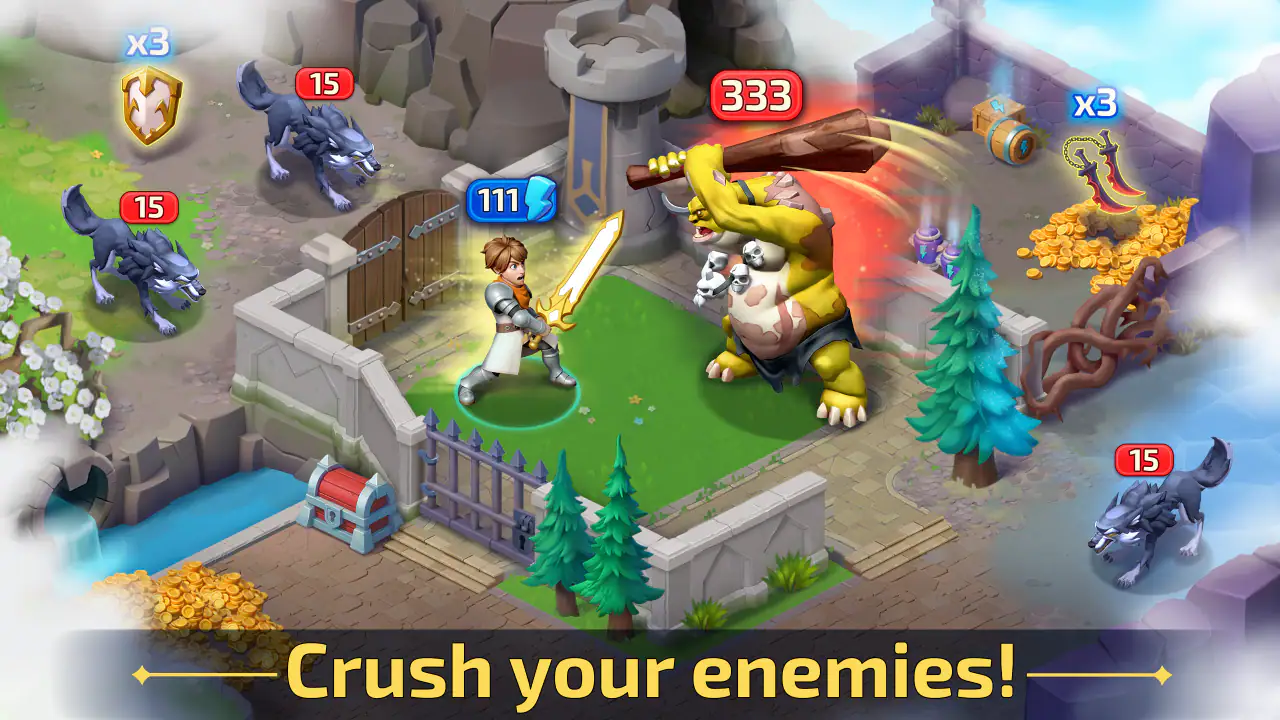
Exploration is likely to appeal to players who enjoy seeing what lies beyond the immediate objective. Fighting gives more urgency to that journey, because progress is not only about looking around; you also need to deal with obstacles. Building then turns successful outings into longer-term development. I liked this loop because it gives a failed or difficult encounter a wider context: the goal is not simply to win one battle, but to continue improving the place and tools connected to the adventure.
That structure also creates a useful choice about how you spend a session. If I have only a few minutes, I can focus on a nearby task or a small improvement. With more time, I can explore, handle a fight, and then use the results to shape the next stage. This makes the game easier to fit around everyday interruptions than an adventure that expects uninterrupted attention.
One practical tip is to avoid treating every available activity as equally urgent. I found it more comfortable to choose a single purpose before starting: advance exploration, prepare for combat, or improve the settlement. This prevents the game from feeling like a list of unrelated chores. It also helps reveal which part of the design you actually enjoy, which is useful before deciding whether to spend money or continue long term.
Gallery
Where Questbound feels strongest
The strongest part of the experience is the connection between action and development. In many adventure games, exploration is the main attraction and construction is little more than decoration. Here, the building side gives progress a visible direction. Conversely, a building-focused game can make adventure feel like a thin excuse for collecting materials. Questbound works best when neither side completely dominates.
I especially appreciated the way the game encourages planning without demanding that I approach it like a complicated strategy title. Before committing to a difficult objective, it makes sense to consider what I have already developed and whether I am prepared to deal with resistance. That small pause adds meaning to the decision. The game does not need to become overwhelming to make preparation feel worthwhile.
Another strength is its accessibility. The Everyone 10+ rating makes it easier to recommend within a household than a darker or more mature adventure. The controls and objectives are approachable enough for a player who does not normally choose deep role-playing games, while the mixture of activities gives experienced mobile players something to manage. I would still play alongside a younger family member at first, not because the game is inaccessible, but because shared guidance makes the early decisions more enjoyable.
The current version is 13.4.0, and the game was released on October 30, 2023. Those details matter mainly because they place the title in a relatively established stage rather than presenting it as an entirely new experiment. When I review a game like this, I look for whether its central loop is clear enough to support repeated visits. Questbound makes a better impression when approached as an ongoing adventure than as a one-time story package.
A realistic everyday use case
Imagine finishing a commute or taking a short break between responsibilities. You have enough time to play, but not enough to commit to a console-style session. Questbound suits that moment if you want a small sense of progress: check the current objective, explore a little, handle an encounter, and make one useful building decision. The important benefit is not that every session feels complete. It is that even a brief session can contribute to a larger plan.
For me, the most effective routine would be to play with a simple target and stop after reaching it. That might mean completing one exploration step or improving one part of the developing area. This approach reduces the temptation to chase every available activity and makes the game feel relaxing rather than demanding. If you tend to lose track of time in free-to-play games, setting a session boundary before opening it is a sensible habit.
Where other adventure games may fit better
Questbound is not the universal answer for adventure fans. If you want fast combat above all else, a dedicated action game will probably feel more satisfying because it can devote more design space to timing, movement, and challenge. If you want a quiet building experience, a construction or simulation game may offer more freedom and less pressure from exploration and fighting.
Players who prefer a large, open world should also compare expectations carefully. Questbound’s appeal comes from the relationship between its activities, not from promising an entirely unstructured world. I would choose a conventional open-world adventure when wandering without a clear task is the main reason I want to play. Here, guided progress is part of the design, and that makes the experience more focused but potentially less liberating.
There is a similar trade-off with story-driven alternatives. A narrative adventure can be the better choice if characters, dialogue, and dramatic pacing are your priority. Questbound is more attractive when you want to participate in progress through actions and improvements rather than simply follow a tightly authored plot. Neither approach is better in every situation; they serve different moods.
The same applies to multiplayer-focused games. If your main goal is competing or cooperating with friends in real time, look for a title built around those interactions. Questbound makes more sense as a personal progression experience. I would not install it expecting the social energy of a competitive game, because that would be judging it by the wrong standard.
What may become frustrating
The blended design can also be its main weakness. When exploration, combat, and building all compete for attention, a player may occasionally feel that none of them receives enough depth. I had to accept that the game is about balance rather than mastery of one system. Someone who wants a highly detailed construction tool may find the building side too limited, while a combat enthusiast may see battles as part of a broader loop instead of the central event.
Repetition is another possible friction point. Returning to familiar actions is useful for steady progress, but the appeal depends on whether you enjoy incremental improvement. If collecting, preparing, and upgrading feel like obstacles between you and the next exciting moment, the game may lose its charm. I would give it a fair trial while paying attention to whether the routine feels purposeful or merely obligatory.
The free-to-play structure deserves an honest warning. The low entry price makes experimentation easy, but the presence of purchases means the experience should be approached with awareness. I would not buy anything simply because progress feels slow during one session. Instead, I would first close the game, return later, and decide whether the purchase would improve my enjoyment over time. That small delay is a useful way to separate a genuine preference from temporary impatience.
Device compatibility is reasonably broad, with support beginning at Android 7.0. That makes the game accessible to people who are not using the newest phone, although actual comfort can still depend on the device and how smoothly it handles the game. If your phone has limited storage or performance, I would check how it behaves during the first sessions before investing heavily in progress or purchases.
How to get more from the progression
My first recommendation is to keep a mental distinction between progress that helps now and progress that helps later. An immediate improvement can make the next encounter easier, while a longer-term building choice may open a more useful route. Thinking in those terms makes the construction element feel strategic without turning the game into a spreadsheet.
Second, use exploration as a way to learn your own priorities. If you repeatedly struggle during fights, direct your next development decision toward preparation rather than simply pushing farther. If combat is comfortable but progress feels slow, focus on the building side. This is a more effective workflow than copying a single approach, because the right choice depends on where your current session is losing momentum.
Third, avoid spending simply to remove every pause. Some breathing room is valuable in a game built around gradual progress. Waiting can be frustrating, but it also gives you a reason to return with a clear objective. I would consider a purchase only after I had played long enough to know that I genuinely enjoy the loop and that the item addresses a repeated problem rather than a one-off inconvenience.
Finally, treat the game as a sequence of small decisions rather than a race. The exploration, fighting, and building elements become more coherent when I stop trying to maximize everything at once. This is one of the less obvious advantages of the design: it rewards a measured pace. Players who rush may see only barriers, while players who plan a little can turn the same structure into a comfortable routine.
Who should choose it
I would recommend Questbound to someone who wants a mobile adventure that mixes discovery with manageable development. It is a particularly good fit for players who enjoy seeing a world or base improve as a result of their actions, but who do not want the complexity of a dedicated strategy game. Families can also consider it because of the Everyone 10+ rating, provided purchases are handled responsibly.
I would be more cautious about recommending it to players who dislike free-to-play mechanics, repeated progression tasks, or guided objectives. If you want a complete premium experience with no purchase decisions, a paid alternative may be more comfortable even if it offers fewer activities. If your ideal game is pure combat, pure construction, or a large unstructured world, a specialized alternative will probably deliver a stronger version of that single interest.
The decision also depends on how you play. For short, regular sessions, the blend is useful because it gives you several ways to make progress. For long sessions, the repeated loop may expose its limits sooner, especially if you are looking for constant narrative surprises. I see Questbound as a game to revisit steadily, not one I would recommend binge-playing for an entire afternoon.
My recommendation after playing
Questbound earns a recommendation from me as a focused, approachable adventure game with a worthwhile mix of exploration, combat, and building. Its best quality is the way those activities support one another: exploration creates direction, fighting adds tension, and construction gives progress a lasting shape. That combination makes it more distinctive than a simple action game or a basic building title.
I would begin with the free version, set purchase limits, and play several short sessions before deciding whether it deserves a permanent place on your device. The game is most enjoyable when you accept its measured pace and make deliberate choices instead of chasing every available task. If that rhythm sounds appealing, the 4.3 average from around four thousand ratings reflects a level of reception I can understand.
My final verdict is simple: install it if you want a family-friendly mobile adventure with steady progression and varied objectives. Skip it if you need deep combat, unrestricted building, a strongly cinematic story, or a completely purchase-free experience. The right reason to choose Questbound is the balance between exploring, overcoming obstacles, and gradually shaping what comes next.
FAQs for Questbound
What is Questbound, and what kind of game is it?
Questbound is an adventure-focused role-playing game built around exploration, quests, character progression, and encounters that gradually reveal the game’s world. Players typically travel through different areas, complete objectives, collect useful items, and improve their characters while making choices during the journey. Before downloading, remember that the exact experience can vary depending on the version, device, and updates available for Android or iOS.
Can Questbound be played offline, or does it require an internet connection?
Whether Questbound works fully offline depends on the feature you want to use. Some parts of the game may be available without a connection, such as previously downloaded content or certain solo activities, while account synchronization, updates, advertisements, cloud saves, or online events may require internet access. We recommend launching the game once while connected and checking its in-game requirements before relying on it during travel.
Is Questbound free to download, and does it include in-app purchases?
Questbound may be free to install, but users should review the store listing and the purchase section before downloading. Many adventure and role-playing games offer optional in-app purchases for currency, cosmetic items, boosts, extra content, or convenience features. These purchases are not always necessary to progress, but they can influence the pace of play. Parents should also enable purchase restrictions if children use the device.
What devices are compatible with Questbound?
Compatibility depends on the operating system, hardware, available storage, and the minimum version supported by the developer. Questbound may run smoothly on recent Android and iOS devices, while older phones or tablets could experience longer loading times, reduced visual quality, or performance issues. Check the official store page for the current requirements, and make sure you have enough free space for the initial installation and future updates.
Does Questbound save progress, and can I transfer it to another device?
Questbound’s ability to save and transfer progress depends on whether it supports an account, cloud synchronization, or platform-specific backup. If the game offers a login option, connecting your progress before changing devices is strongly recommended. Avoid deleting the app or resetting your phone until you confirm that your latest progress has synchronized successfully, because locally stored saves may not be recoverable after removal.
Pros
- Engaging quests provide a clear sense of progression.
- Exploration rewards curiosity with new discoveries and challenges.
- The interface is easy to learn
- even for first-time players.
- Short play sessions make it convenient for mobile gaming.
- Regular objectives help keep gameplay focused and motivating.
Cons
- Some quests may feel repetitive after extended play.
- Progress can become slower without frequent play sessions.
- The small-screen layout may feel crowded on certain devices.
- New players may need time to understand all game systems.
- Content variety may depend on updates and future expansions.


